
Wakulla Detention Release Destinations
The Wakulla County Sheriff's Office, or WCSO, operates the detention facility and creates the decisive local jail release event. A person may leave after posting bond, receiving release on recognizance, serving the ordered jail term, or obtaining a court-directed release. Those outcomes can place the person in the community. Yet the same physical exit can be a transfer to the Florida Department of Corrections, another county jail, the U.S. Marshals Service, or immigration custody. A name disappearing from current custody does not answer which event occurred.
Ask for the release method, the destination, and the agency that accepted custody. The court docket can then show the bond order, sentence, dismissal, or other action behind a community exit. If the record names a new custodian, follow that agency's search route. The full Wakulla County released-person search and records sequence is available on the Wakulla County released inmates home page.
Confirm a Wakulla Jail Release
WCSO has no verified browser-based archive for released people. Its official app has an inmate-search feature, but an absent name is only a lead. Processing lag, spelling, a transfer, or a new custodian can explain the result. For an immediate check, call Corrections with the full legal name, date of birth, and approximate booking date. Ask whether the person was released to the community or transferred and, if transferred, which agency received the person.
Turn the phone answer into a durable record. A focused request should seek the booking record, release sheet or order, and the applicable Commitment and Release List entry. It should also ask for the release time, method, destination, and accepting agency if those facts were recorded.
- Check the official WCSO app or call Corrections for current reported custody.
- Request the release sheet from the WCSO public-records custodian.
- Match the release with the Wakulla Clerk criminal case and court order.
- If the event is a transfer, check FDC, ICE, USMS, or the named county.
- Use VINELink as a notice source, then verify with the records custodian.
Florida's GS2 records schedule recognizes a daily Commitment and Release List. It may include the booking number, name, charge, court, bond, how released, and returnable date. The schedule describes fields that may be present, not a promise that every WCSO list contains every field.
Note: A current-custody tool is useful for who remains confined, while the sheriff's release sheet documents how local custody ended.
Wakulla Release Records Contact
WCSO's public-information page routes written and digital records to its records custodian. Official WCSO pages list two custodian phone numbers, so email and the street address provide a clear written trail. Florida public-records law requires prompt acknowledgment and a good-faith response, but it does not promise a set number of days. Narrow requests cost less and are easier to identify.
Wakulla County Sheriff's Office
Public Records Custodian
15 Oak Street
Crawfordville, FL 32327
Corrections: (850) 745-7100
Records: (850) 745-7158 or (850) 745-7135
Fax: (850) 926-0896
Email: gstokley@wcso.org
Administrative hours: Monday through Friday, 8:00 a.m. to 5:00 p.m., closed holidays
The request can specify the full name, date of birth if known, booking number if known, and a short date range. Ask for electronic copies, the nonexempt parts of any partly withheld record, and the statutory basis for each redaction. WCSO publishes a charge of $0.15 per page for arrest reports or the amount allowed under Florida law. An extensive request may also involve a reasonable special-service charge, so requesting a cost estimate is prudent.
The WCSO public-information page shows the record route. The successful manifest capture below preserves that official access point.
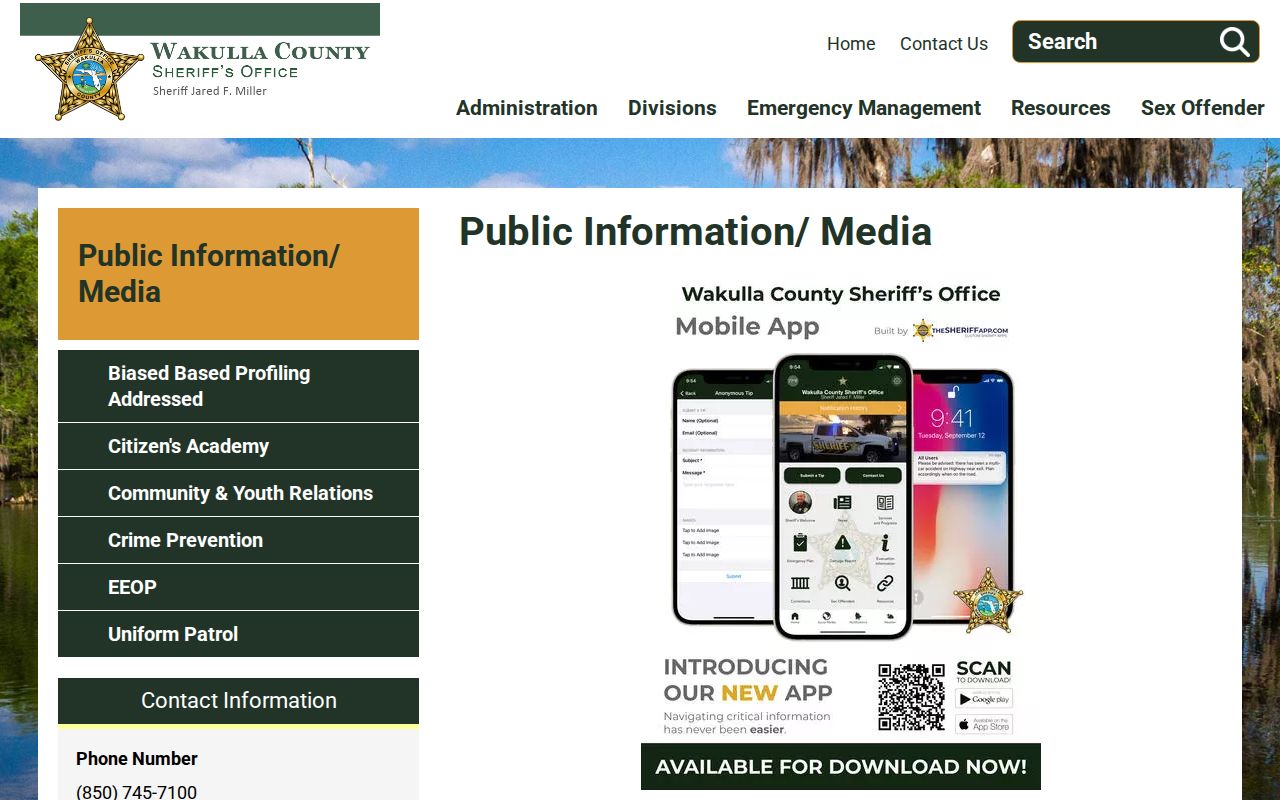
The capture supports use of WCSO, rather than a commercial roster, for the local release record and booking material.
Wakulla Releases Across Custody Systems
This detention facility holds more than one legal population. WCSO describes local-inmate and immigration-detainee sections. Its support-services material also says the jail has contracted to hold federal pretrial prisoners for the U.S. Marshals Service. The right follow-up depends on which authority controlled the confinement.
| Recorded destination | Meaning | Next confirmation |
|---|---|---|
| Community | Local confinement ended without a named receiving custodian | WCSO release sheet plus the court order |
| FDC | A sentenced state-prison transfer, not community release | FDC statewide offender record |
| USMS | Federal pretrial custody or transport continued | Federal court and responsible USMS office |
| ICE | Immigration custody or movement may have followed | ICE ODLS or ERO after WCSO destination confirmation |
| Another jail | A county hold or transfer continued detention | Receiving county's official custody office |
The BOP locator is for federal prison records and does not reliably identify a USMS pretrial defendant held at Wakulla. ICE's locator is mainly for current detention and is not a lasting release archive. Thus, WCSO's recorded destination remains the starting point.
- Detainer
- A request or authority that can cause another agency to take custody after local confinement ends.
- Transfer
- A move from one custodian to another. It is not a community release.
- Bond release
- A pretrial exit subject to the pending case and its conditions.
- Time served
- Completion of the custodial time ordered by the court, which may not end all supervision.
Wakulla Jail Release Context
The official WCSO corrections page says the jail was built in 1991 with rated capacity for 139 people. A wing added in 2004 raised the stated rated capacity to 350. WCSO also lists a series of state correctional accreditation milestones, including Excelsior reaccreditation in 2020. Those facts help explain how one rural county building can house local detainees along with other custodial groups.
The manifest image below comes from the same WCSO facility source and matches the Wakulla County Detention Facility.
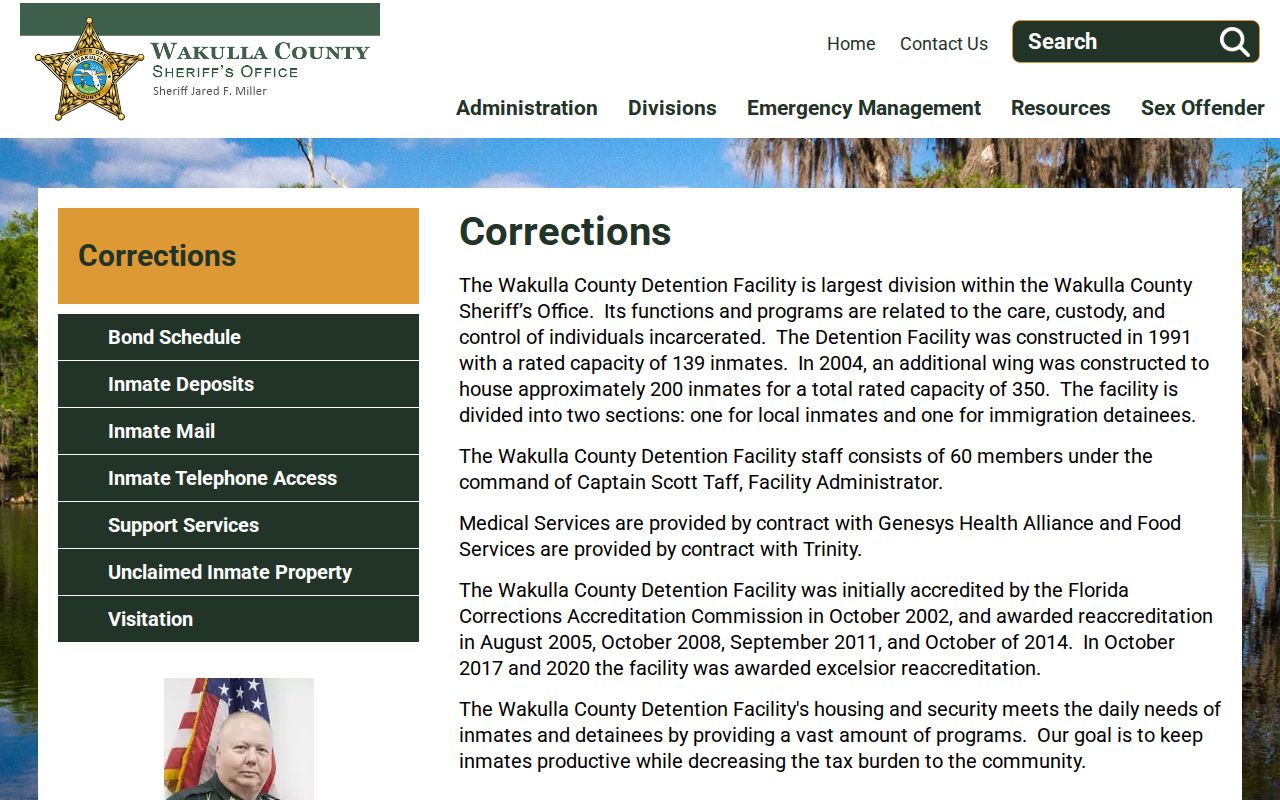
Its facility detail identifies the local source to contact when a person's exit method or next custodian remains unclear.
Wakulla Work Camp Distinctions
Wakulla has two similarly named programs that must stay separate. WCSO describes a probation-condition Work Camp whose participants report in the morning, work on assigned projects, and are released each afternoon. That daily departure is not discharge from probation. It is part of the court-ordered program.
The Wakulla Correctional Institution Work Camp is different. It is an FDC prison component within the state complex. Placement there, return to the main unit, or movement to another FDC site remains state custody. A person leaving the FDC Work Camp needs a statewide FDC release record before the event can be called a release to the community.
WCSO support services is the official source for the county program and the federal-prisoner contract. Read the program name beside the operating agency to avoid confusing an afternoon county-program departure with a state-prison discharge.
Note: The same phrase can describe two legal settings, so verify the operator, location, and recorded status before drawing a release conclusion.
Wakulla Release Property Records
WCSO says booking, daily sustenance, and possible medical fees can apply, but inability to pay does not prevent release. An unpaid balance may be sent to billing with added fees or recovered during a later incarceration. It should not be mistaken for authority to hold a person after a valid release.
Property details deserve a record-based approach. The corrections menu labels an Unclaimed Inmate Property link, yet the research-date destination did not give a pickup procedure, deadline, or identification rule. Call Corrections for the current written policy. A records request can ask for receipts for property or money taken at admission, receipts for items returned on release, and transfer papers showing that property followed a transferred person. Those document types appear in Florida's GS2 description of inmate-incarceration records.
Release verification is strongest when three facts agree: WCSO's method and destination, the court's legal order, and the next agency's custody status when a transfer occurred. That evidence distinguishes a community exit from a change of buildings and preserves the exact event rather than an assumption based on a missing roster name.