
Wakulla Annex Release Meaning
FDC operates Wakulla Correctional Institution Annex at the same Crawfordville complex as the Main Unit and Work Camp. Official audit material says the Annex processes newly received prisoners into the Wakulla facilities. That fact changes how its location label should be read. An arrival at the Annex may be the start of a state placement, while departure from the Annex may be reassignment inside FDC rather than release.
A true community exit ends the state incarceration reflected in the current status. It may occur at sentence expiration or under parole, conditional release, or another lawful mechanism. By contrast, movement to the Main Unit, Work Camp, reception process, or a prison elsewhere in Florida keeps FDC custody intact. A release history entry must be read beside current status because an old release can be followed by a later return.
Search Wakulla Annex Records
The statewide FDC Offender Search follows a person across every Florida institution. Search by DC number when possible. If only a name is known, compare date of birth, aliases, photograph, and other descriptors before relying on a match. Reception work can create fast location changes, making the person-level DC number more dependable than a snapshot of the facility name.
- Choose the broad FDC search if the person's current category is unknown.
- Enter the DC number or the full name and review all plausible matches.
- Open the detail and note current status plus current or last location.
- Read incarceration dates and release history in time order.
- Check the supervised population when the release type may carry oversight.
The profile vocabulary matters. An active inmate can have a Current Release Date, which is a changeable forecast. Florida law calls the calculation concept the tentative release date. A released result instead uses a past-tense Release Date and can show Custody: N/A plus a Date Out-Custody. Only the latter type of event, supported by current status, confirms that FDC incarceration ended.
Inmate Release data is updated nightly. Population information is fully refreshed weekly, with location and release-date changes nightly. FDC still warns that the record can change quickly. Verify close to the expected date when a timely answer matters.
Wakulla Annex Status Evidence
The most reliable reading combines several fields. No single line should carry the whole conclusion, especially for a reception site where placement is expected to change.
| Evidence | What it can establish | What it cannot establish alone |
|---|---|---|
| Current Location: Wakulla Annex | Reported placement at the Annex | A release date or final assignment |
| New institution location | Reported transfer inside FDC | Community release |
| Current Release Date | Projected active-prison exit | That release occurred |
| Release Date and Date Out-Custody | A dated historical FDC exit | That no later return occurred |
| Current supervision status | Post-release oversight or another community status | Unconditional discharge |
When current status shows a later admission, the earlier release remains history only. When the record shows ACTIVE SUSPENSE supervision, the person is still on supervision but temporarily unavailable for direct supervision, often due to confinement. That label must not be translated into a simple released status.
The official FDC search source shown below is the correct access channel for the Annex.
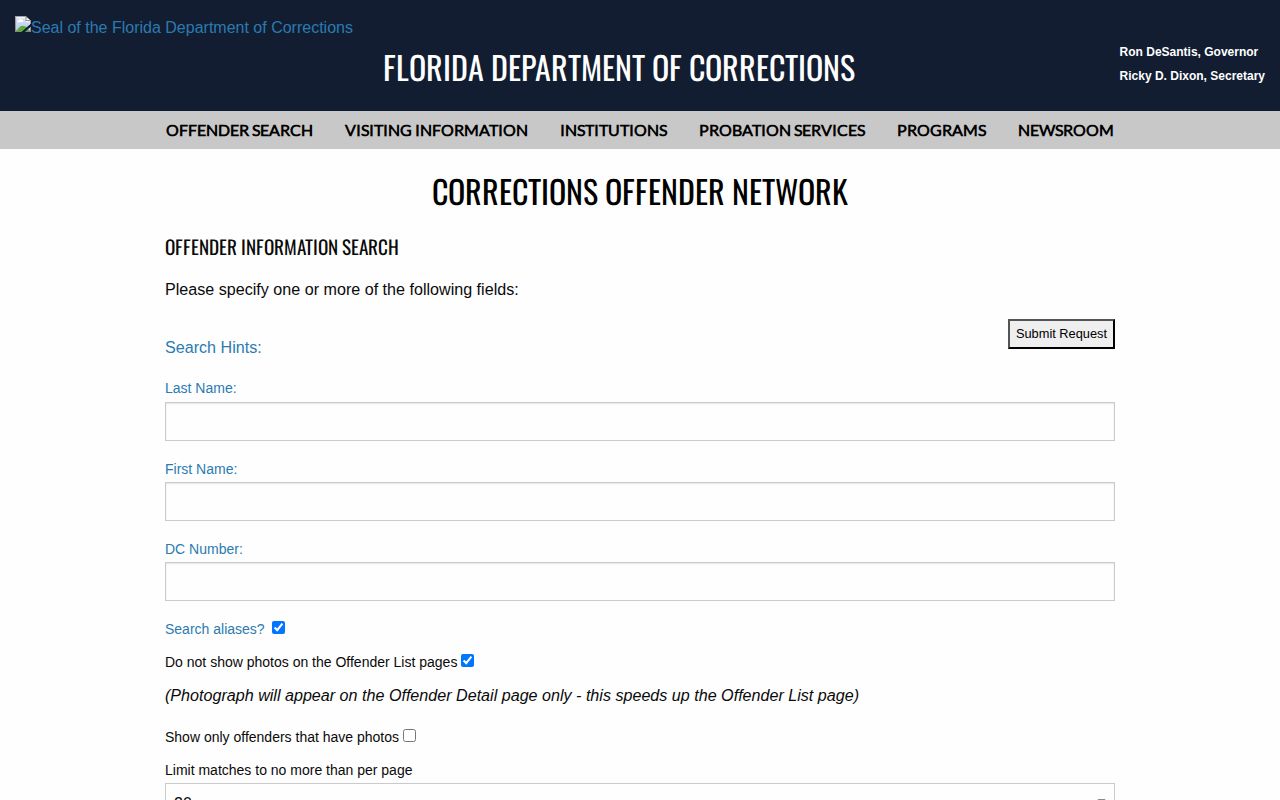
The form searches statewide person records, which avoids treating a reception-location change as a release event.
Wakulla Annex Records Contact
The Annex address identifies the physical facility. Statewide offices handle the stronger historical and sentence-data record. Ask Central Records for public correctional history or a maintained discharge document. Direct release-date and release-calculation questions to the Bureau of Admission and Release. Include the DC number so staff can separate the correct commitment from a same-name record.
Wakulla Correctional Institution Annex
Florida Department of Corrections
110 Melaleuca Drive
Crawfordville, FL 32327
FDC Central Office: 501 South Calhoun Street, Tallahassee, FL 32399-2500
Main: (850) 488-7052
Admission and Release: (850) 488-9167
Central Records: (850) 488-9859
A focused request can identify the full name, DC number, date of birth, Annex, and date range. Useful record descriptions include release history, release date and type, sentence-data sheet, discharge certificate where maintained, and public photograph. Exempt medical, victim, security, and presentence material does not become public merely because incarceration ended.
If the record points to community supervision, the assigned Community Corrections office can clarify where administrative reporting occurs. The office follows the person's supervision location. It should not be assumed from Wakulla County, the sentence county, or the institution of release.
Wakulla Annex Reception Transfers
Reception is a correctional intake function. It can involve identification, record review, classification, and assignment before a person moves to another prison setting. The research establishes the Annex's role in processing newly received prisoners, but it does not establish a fixed time that each person stays there. Do not infer a release or a placement schedule from the role alone.
A transfer sequence can look like Annex to Main Unit, Annex to Work Camp, or Annex to another FDC institution. All remain one state commitment unless the record inserts an actual release and later admission. For a person coming from Wakulla County Detention Facility, the local jail's transfer notation and the later FDC admission should be reconciled. The delay before FDC intake appears online can leave a short gap that is not proof of community freedom.
- Reception
- FDC intake and processing for newly received state prisoners.
- Classification
- The correctional review used to determine a person's custody and placement needs.
- Transfer
- Movement between custodial locations without ending incarceration.
- Release
- An authorized end of the recorded FDC incarceration, sometimes followed by supervision.
Note: Facility location can change during reception before the public system completes its next scheduled data refresh.
Wakulla Complex Release Roles
The official Wakulla institution listing provides the matching manifest view for the complex that includes the Annex.
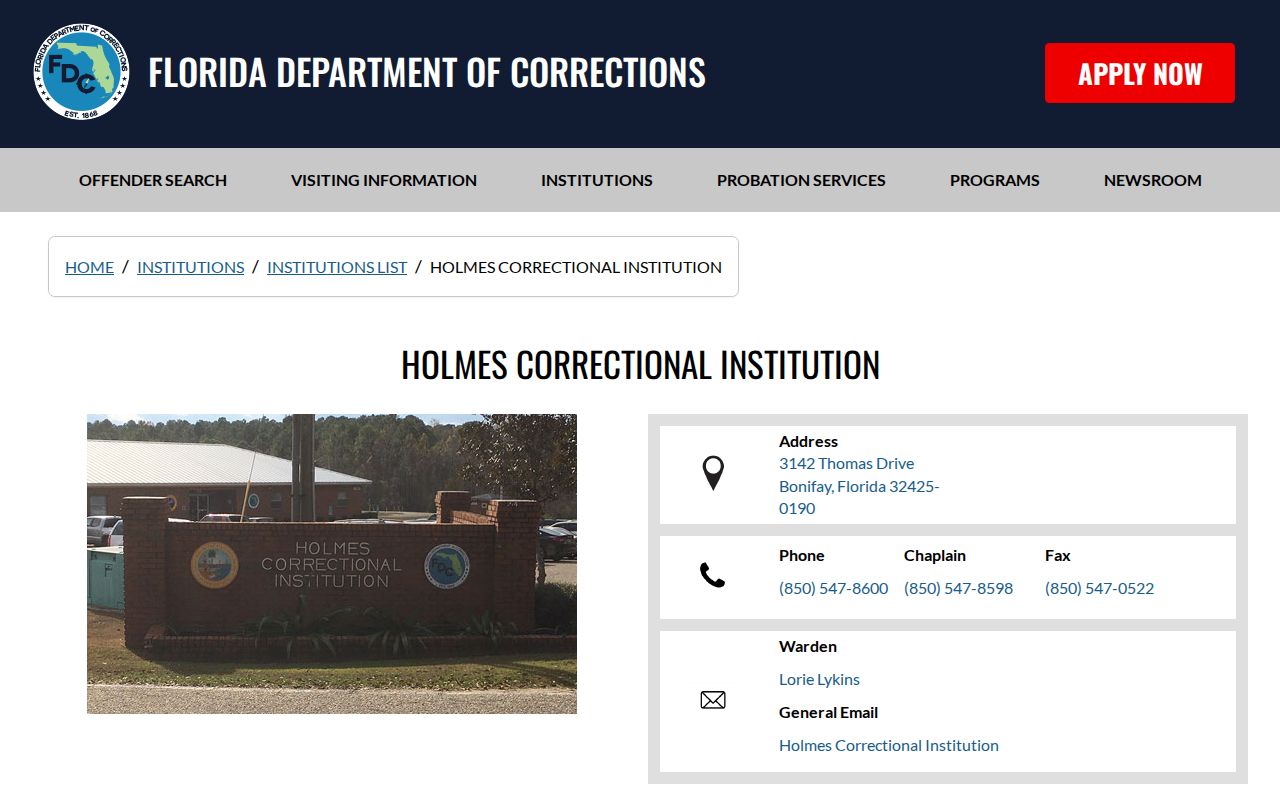
The complex page identifies the official FDC setting, while the individual offender record supplies the release and custody facts for a named person.
The Main Unit is a prison placement. The Annex is both a prison component and a processing point for new arrivals. The FDC Work Camp is another incarcerated component. One address and one complex can thus produce several location labels without producing several releases.
The county sheriff's probation Work Camp is outside this FDC structure. Its participants can report for assigned work and leave later that day while remaining under a probation condition. That daily event should not be mixed with the FDC Annex release record. The operator gives the clearest clue: Florida Department of Corrections for the Annex, WCSO and the court for the county program.
After a Wakulla Annex Release
Community supervision must be checked separately from incarceration. Parole is a supervised release mechanism for a limited eligible population. Conditional release is another post-prison form and is not parole. Unconditional discharge means no active term remains under the record being reviewed. Each label has legal weight, so reproduce the official term rather than substituting a generic phrase.
FDC's Supervised Population search can show Supervision Begin Date, Current Status, Supervision Type, Current Location, and Scheduled Termination Date. The Florida Commission on Offender Review makes parole and certain release decisions, while FDC Community Corrections carries out supervision. A hearing schedule, presumptive date, or Current Release Date is not proof that the person physically left the Annex.
The FDC Inmate Release search provides the focused released-state-offender route. The strongest Annex release confirmation uses the detailed statewide record and an FDC records-office response when necessary. A county jail roster cannot confirm this state-prison exit. VINELink may give an event notice, but it is not the custodian of the FDC discharge file and should prompt verification rather than replace it.