
How Wakulla County Releases Work
A Wakulla County release means one identified custody ended. It does not always mean the person walked into the community. Someone may leave the Wakulla County Detention Facility on bond, recognizance, after dismissal, after serving a county sentence, or because a judge ordered release. The same jail may also transfer a person to the Florida Department of Corrections, another county, the U.S. Marshals Service, or U.S. Immigration and Customs Enforcement. Only the first group clearly left government confinement at that point. A transfer changes the custodian.
State custody follows a separate path. A person at Wakulla Correctional Institution, its Annex, or its Work Camp remains in FDC custody when moved among those units. A true FDC exit may be sentence expiration, conditional release, parole for an eligible sentence, or another authorized release. Parole and conditional release include community supervision. A discharge usually means the relevant sentence or supervision term ended, though the exact official status must still be read in context.
- Bond
- A pretrial release secured under court-set terms. It is not a finding that the charge ended.
- Time served
- Completion of the custodial portion credited by the court. Other case duties may remain.
- Transfer
- Movement to another agency or facility while custody continues.
- Discharge
- The end of a stated custody or supervision obligation shown by the responsible agency.
Wakulla County Release Types
The release method controls where the next reliable record appears. The sheriff’s release sheet should state how the local jail event ended and, when recorded, the destination or accepting agency. Court files explain the order behind bond, recognizance, dismissal, a county sentence, or probation. FDC records are decisive for a state-prison admission or exit. Federal and immigration movements require their own channels.
| Recorded outcome | What it means | Best next source |
|---|---|---|
| Bond or recognizance | Local pretrial custody ended under court terms | WCSO release sheet and Wakulla criminal case |
| Time served or sentence expired | The ordered local custodial term was credited or completed | Release sheet, judgment, sentence, and jail-credit entries |
| FDC transfer | County custody ended but state confinement began | WCSO destination plus FDC offender detail |
| USMS or ICE transfer | Another federal custodian accepted the person | WCSO destination, federal case or ICE channel |
| FDC parole or conditional release | State prison custody ended with supervision | FDC release and supervised-population records |
| Unconditional FDC discharge | The shown state custodial term ended without listed supervision | FDC release history or a formal FDC record |
A death, escape, or medical move may also close or alter a custody entry, but none should be described as ordinary community release. Read the stated method. If an abbreviation is unclear, request the underlying order rather than expanding the code by guesswork.
Wakulla County Release Record Fields
A useful Wakulla County release record answers who was held, which custody ended, when it ended, and why or where the person went. Florida’s records schedule describes possible fields for booking records and daily Commitment and Release Lists. The schedule does not promise that every WCSO report contains every field, so a focused request should name the fields needed.
| Field | What it establishes |
|---|---|
| Full name and date of birth | Identity anchors for separating similar names |
| Booking number | The local jail event tied to the record |
| Admission and release date or time | The span of that confinement event |
| Charge, case, and court | The legal matter connected to custody |
| Bond and release method | How the jail event ended |
| Destination or accepting agency | Whether the person entered the community or another custody |
| Property or money receipt | What was returned or moved with a transfer, if documented |
Florida GS2 also describes incarceration files that may include booking cards, commitment papers, property receipts, money returned at release, and transfer orders. These can resolve a dispute that a short summary cannot. The criminal court order remains important because “bond” does not show a final disposition, and “case closed” does not establish the physical release time.
Request Wakulla County Release Records
WCSO has no verified browser archive for released people. The documentary route is a narrow public-records request to the Public Records Custodian, Wakulla County Sheriff’s Office, 15 Oak Street, Crawfordville, FL 32327. The current public-information page routes written or digital records to Geneva Stokley at the WCSO records contact, while a separate official FAQ lists another custodian number. Using the published email, address, and both official phone paths reduces the risk of a stale routing detail.
- Identify the person by full name, date of birth if known, booking number if known, and a narrow date range.
- Ask for the booking record, release sheet or order, the applicable Commitment and Release List entry, and the booking photograph only if needed.
- Request the release date and time, method, destination or accepting agency, and any recorded order reference. Ask for electronic copies.
- If material is withheld, ask for the nonexempt remainder and the statute supporting each redaction. Request a cost estimate before extensive work begins.
- Pair the sheriff record with the Wakulla court order when the release code or case outcome needs interpretation.
Public Records Custodian
15 Oak Street
Crawfordville, FL 32327
Records: (850) 745-7158 or (850) 745-7135
Fax: (850) 926-0896
Administrative hours: Monday through Friday, 8:00 a.m. to 5:00 p.m., except holidays
WCSO posts $0.15 per page for arrest reports or the amount allowed by section 119. A large request may carry a reasonable special-service charge based on actual labor or technology. Florida law calls for prompt acknowledgment and a good-faith response, not a fixed response deadline. Narrow wording controls both cost and delay.
The official WCSO public-information screen shows the release-record request route. The captured page below helps identify the correct county source before a request is sent.
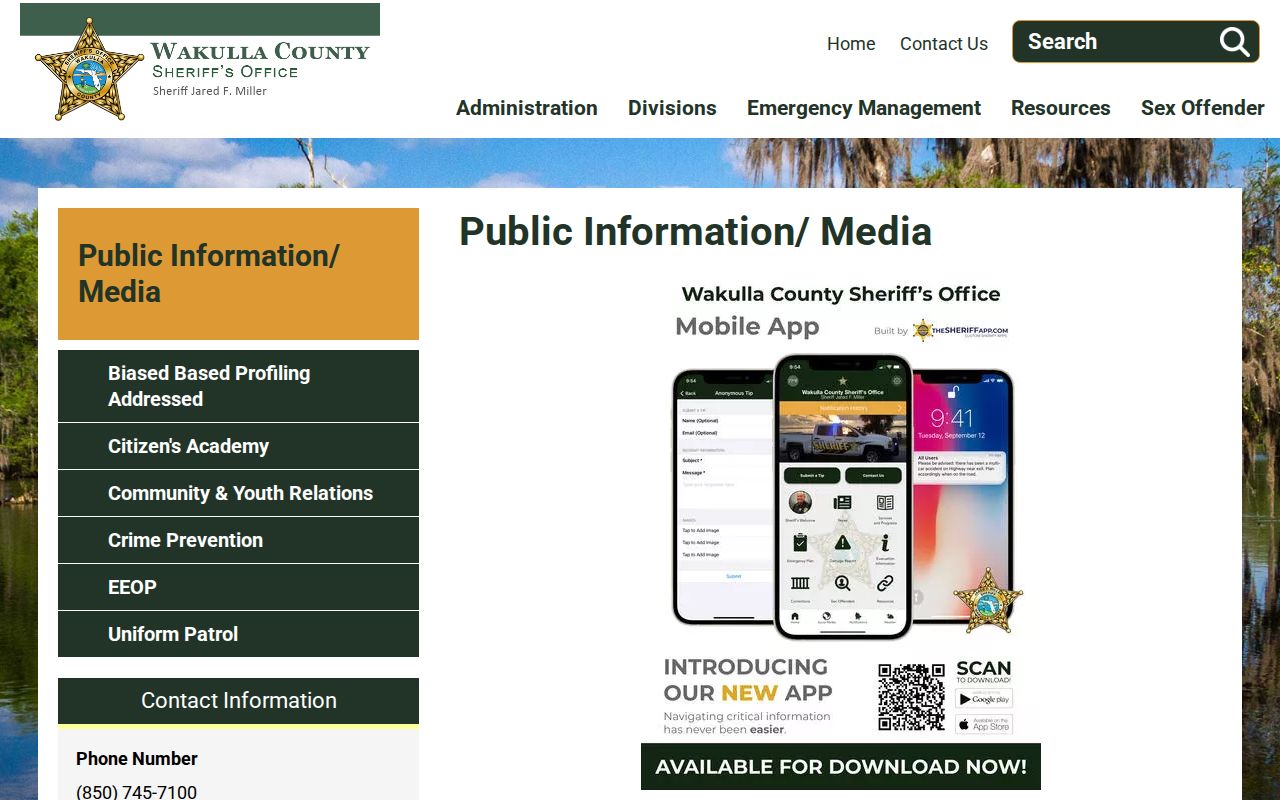
This source is for WCSO records, not FDC prison files or a court-certified order.
Wakulla Release Record Retention
Florida Constitution article I, section 24 and chapter 119 support access to public records subject to specific exemptions. Florida Statutes section 119.07 directs a custodian to permit inspection and copying, respond in good faith, produce nonexempt portions, and identify the legal basis for withheld material. Juvenile information, sealed or expunged records, medical material, victim details, active investigative information, and security data may be restricted.
The state GS2 schedule sets a minimum of one anniversary year after release for booking records, daily commitment and release lists, and inmate-incarceration records. A jail docket book is permanent. WCSO may keep records longer, and court or investigative schedules may differ. Removal from a website says nothing about lawful agency retention.
A live roster is a current-custody tool. The retained release record is the better source after the person leaves or transfers.
Wakulla Release Records and Courts
The Wakulla Clerk maintains misdemeanor and felony case files. Search the criminal case by case number when possible, then inspect entries for bond, recognizance, judgment, sentence, jail credit, probation, dismissal, revocation, satisfaction, or closure. Online information is limited and is not authoritative. The actual filed order supplies the best legal explanation when a docket label is short or delayed.
Florida sealing and expungement are court processes. FDLE’s Certificate of Eligibility is a first step, not the relief itself, and a court retains discretion. The Wakulla Clerk posts a filing charge for the local petition. When relief is granted, public access changes under the governing statute, though authorized agencies may retain access. No release page or outside publisher can promise that a record qualifies.
Use the Wakulla Court Record Search, not the Landmark official-records index, for a criminal case. This captured court-search gateway shows the correct case-oriented route.
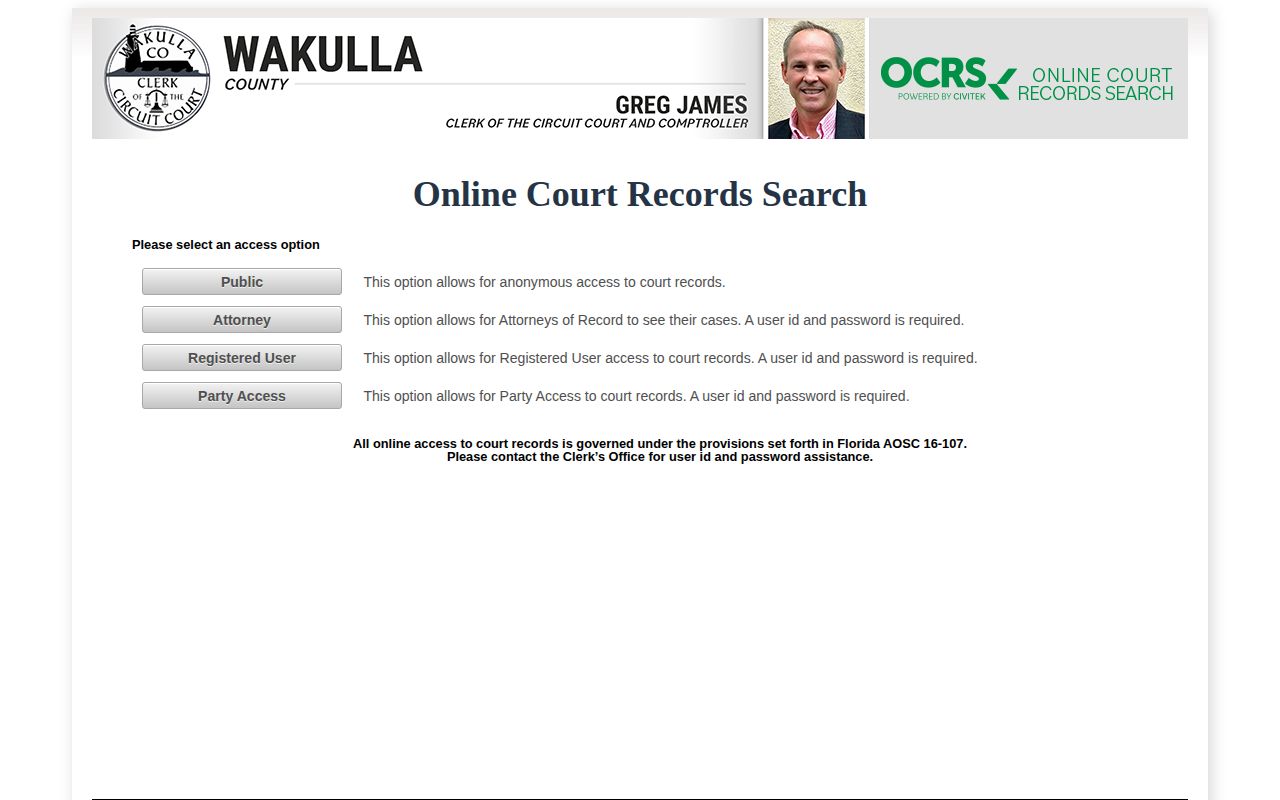
Obtain the filed bond, disposition, or sentencing document from the Courts division if the online entry is incomplete.
Find Wakulla County Released Inmates
A custody-specific sequence prevents the most common error: treating absence from one list as proof of freedom. Start with WCSO for a local jail departure. Then use the criminal case to identify the order. Move to FDC only when state imprisonment or state supervision is plausible. Use VINE as an alert and event source, not as the custodian of the release file. Federal and immigration cases branch to BOP, USMS, or ICE.
- Check WCSO’s official site or app for reported current custody. If the person is missing, call Corrections at (850) 745-7100 and ask whether the exit was community release or transfer.
- Request the WCSO release sheet with the method, time, destination, and accepting agency. A daily list can support a date-range check.
- Read the Wakulla criminal case and obtain the actual court order when the docket label is unclear.
- Search FDC by name and DC number when prison or Community Corrections is possible. Read current status and dated history together.
- Use Florida VINE for one-person status and future event notices, then confirm the event with WCSO or FDC.
- Use BOP for a federal sentence, ICE ODLS for qualifying immigration custody, and the responsible court or agency when a local record says USMS transfer.
The Wakulla County jail releases page explains how to request a daily list when the question is who left during a recent window. A named-person search should still end with a person-specific record.
Florida Search for Wakulla Releases
The FDC Offender Search follows people in the state prison and Community Corrections systems. Search broadly when the current category is unknown. A DC number is the best discriminator, but name, birth date, middle name, alias, descriptive fields, and photograph help separate similar results.
| Search or result field | How to use it |
|---|---|
| First and last name | Start broad and review all plausible matches |
| DC number | Match a specific FDC identity |
| Current status or location | Determine whether the record reports present prison or supervision status |
| Release history | Find dated past FDC exits and later returns |
| Current Release Date | Read the changing public field for an active state prisoner |
| Supervision status | Check whether community supervision follows prison release |
An FDC released-offender detail can show a past Release Date, “Custody: N/A,” and out-custody history. Read the present status too because a later admission may follow an older release. Someone held only at the Wakulla County jail may have no FDC record. FDC also warns that data changes and that a historical address is not updated after release.
The official FDC search screen is the statewide entry point for this part of a Wakulla released-inmate search.
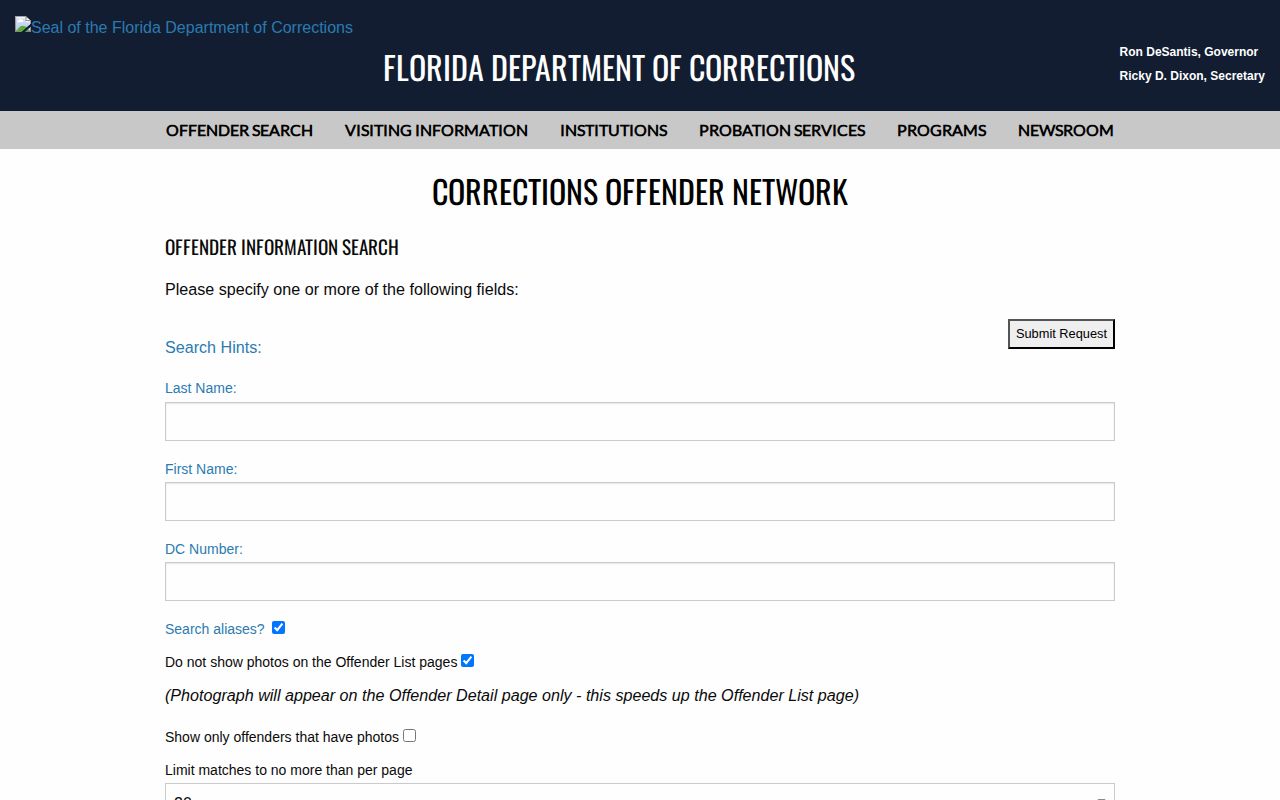
The form does not replace WCSO records for a person who never entered FDC custody or supervision.
Wakulla Releases Versus Current Custody
Each public system answers a narrow question. Comparing the source with the claimed event is more reliable than searching every database and treating any match as current.
| Question | Correct source | What absence means |
|---|---|---|
| Is the person reported in Wakulla jail now? | WCSO app or Corrections call | Nothing conclusive without release or transfer detail |
| How did local jail custody end? | WCSO release sheet and daily list | Request the retained record |
| Did state prison custody end? | FDC current status and release history | The person may never have entered FDC |
| Is state supervision active? | FDC supervised-population detail | Check the correct name and system before concluding |
| Did BOP custody end? | BOP Inmate Locator | Another custodian may still hold the person |
| Is the person in ICE custody? | ICE ODLS and ERO | Name mismatch, exclusions, lag, or recent departure remain possible |
Can VINE alone prove unconditional release? No. A VINE event reflects data sent by a participating agency and may lag. The agency release record supplies the method and destination, while a court or corrections record explains continuing supervision.
Wakulla Release Alerts and Federal Records
Florida VINE supports a one-person search and event notifications for participating county jail, FDC, and DJJ data. Compare identity and agency before opening a result. A transfer event does not equal release. After an alert, confirm with WCSO for local custody or FDC for state custody.
The BOP locator retains many former federal prisoner results and can show “Released” or “Not in BOP custody.” That statement is limited to BOP. A person may be with USMS, a state, a county, ICE, or under federal supervision. ICE ODLS is mainly a current-detention locator and may include some people released from ICE custody during a recent period, but it is not a lasting release archive. A WCSO record showing the accepting agency is the best bridge to the right federal channel.
Getting Home After Wakulla Release
Florida Statutes section 951.04 gives a concrete rule for a qualifying county prisoner discharged after serving the sentence, pardon, or parole. The county must furnish transportation, or the money equivalent, back to the place from which the person was sentenced. The rule does not cover every bond, detainer, or transfer. Ask WCSO whether it applies to the recorded release type rather than assuming that every jail exit includes a ride or payment.
Destination matters for practical reasons too. A person handed to FDC, ICE, USMS, or another jail is not traveling home from Oak Street. The release sheet should be checked before making pickup plans.
Identification After Wakulla Prison Release
Florida’s state-prison process includes an identification rule that does not apply to every county-jail release. Under section 944.605, FDC must work with state agencies to obtain a birth certificate and state identification card for qualifying Florida-born prisoners before expiration-of-sentence release, subject to listed exceptions. FDC must also assist with Social Security cards and documentation for people born outside Florida.
This duty belongs to FDC. A person bonding out of the Wakulla County Detention Facility should not expect the same state-prison document process. For jail property or identification held at booking, ask Corrections for its current written procedure and request the property receipts described in the incarceration file.
Wakulla Releases and Federal Transfers
WCSO describes local and immigration-detainee sections at the Wakulla County Detention Facility. Its support-services page also describes a contract to hold federal pretrial prisoners for USMS. This mix makes “Who took custody next?” a central question. A person can physically leave Oak Street and remain confined under another authority.
For an FDC transfer, reconcile the sheriff destination with the later statewide offender record. For an ICE transfer, use ODLS and ERO after obtaining the A-number or exact biographical details when available. A USMS transfer leads to the federal case and responsible Marshals district because USMS does not offer a public historical locator like BOP. Do not call deportation, removal, or institutional movement a community release.
Wakulla Release Facility History
The WCSO Corrections page says the county jail opened in 1991 with a rated capacity of 139. A wing added in 2004 raised the stated rated capacity to 350. The same source records repeated correctional-accreditation milestones, including Excelsior reaccreditation in 2020. These figures describe capacity and institutional history, not the number of annual releases.
FDC’s April 2024 county-detention report recorded an average daily population of 88 and identified a substantial pretrial share. That is a monthly custody measure. It must not be converted into annual bookings, releases, or average length of stay. No official annual Wakulla release count was located.
Wakulla Jail Fees at Release
WCSO says booking and daily sustenance charges apply and that medical fees may also arise. It also states that inability to pay does not prevent release. An unpaid balance can be sent to billing with added fees or recovered during a later incarceration. A balance should never be treated as proof that an otherwise authorized release was stopped.
Property questions require equal care. The Corrections menu has an “Unclaimed Inmate Property” label, but the linked page did not provide a pickup rule, deadline, or identification requirement at the research date. Call Corrections or request the current written policy. Property and money receipts, including receipts for funds returned at release or transfer orders showing property moved with a person, are precise record targets.
Two Wakulla Release Work Camps
Wakulla uses “Work Camp” for two different legal settings. The FDC Work Camp is part of the Wakulla Correctional Institution complex. A person there remains a state prisoner, and movement between the camp, main unit, Annex, reception, or another FDC institution is not release.
WCSO also describes a Work Camp for people sentenced to that program as a condition of probation. Participants report in the morning, work on assigned projects, and are released each afternoon. That daily exit does not finish probation. The official status and court terms, not the familiar phrase “released each afternoon,” determine whether supervision has ended.
Wakulla County Release Facilities
The five mapped facilities require three distinct record routes. WCSO controls local jail release records. FDC controls state-prison movement, release, and supervision history. DJJ and the juvenile court control youth detention information under separate confidentiality rules.
- Wakulla County Detention Facility: local jail, immigration-detainee, and contracted federal-pretrial populations; confirm method and accepting agency with WCSO.
- Wakulla Correctional Institution: state prisoners; use FDC current status, sentence, and release history.
- Wakulla Correctional Institution Annex: intake and housing within the FDC complex; a location change is not release.
- Wakulla Correctional Institution Work Camp: continued state custody verified through the same FDC record.
- Leon Regional Juvenile Detention Center: a Tallahassee secure center that serves Wakulla; lawful youth-release access runs through DJJ, the juvenile court, counsel, or an authorized parent or guardian.
Those facility distinctions keep a current roster, a historical release record, and a transfer record from being mistaken for one another.
Public Record Search
Sponsored Results